Proof-of-Work (PoW) is one of the best-known consensus mechanisms in crypto. Bitcoin is the clearest example: miners compete to solve a computational puzzle, the winning miner adds the next block, and the network stays synchronized without relying on a central authority.
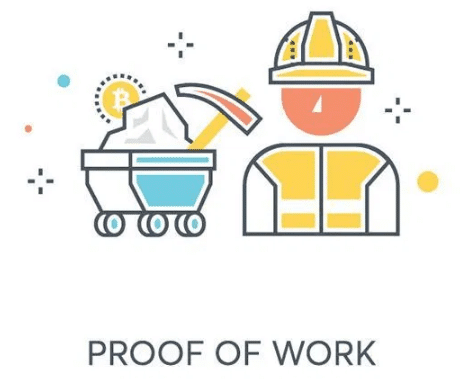
PoW secures a blockchain by making block production costly. That cost is what helps prevent spam, fraud, and double spending.
What is Proof-of-Work in simple terms?
Proof-of-Work is a system where computers called miners use processing power to compete for the right to confirm transactions and create a new block. The work is real because it requires electricity, hardware, and time. That makes attacking the network expensive.
In Bitcoin, a miner gathers pending transactions, packages them into a block, and repeatedly hashes block data until they find a valid result that meets the network’s difficulty target. If they succeed, the block is broadcast to the network and, once accepted, added to the blockchain.
This process does two jobs at once: it confirms transactions and protects the ledger from being rewritten too easily.
What role do miners play in the Proof of Work system?

Miners are the participants doing the actual work in a PoW network. They verify transactions, assemble blocks, and compete to solve the cryptographic puzzle required to publish the next block.
That matters because it helps stop double spending. Without a mechanism like PoW, someone could try to spend the same coins twice by presenting conflicting transaction histories. Mining makes that much harder because changing the ledger would require redoing enormous amounts of computational work.
In Bitcoin’s early years, mining could be done with consumer hardware. Today it is far more specialized. Most serious Bitcoin miners use ASIC machines, and many operate through mining pools to smooth out income. Instead of waiting a long time to mine a block alone, pool participants combine hash power and share rewards based on the work they contribute.
The more hashes a miner or pool contributes, the greater its chance of finding a valid block. As more computing power joins the network, Bitcoin adjusts mining difficulty so blocks continue to arrive at roughly the same average pace.
How Bitcoin block rewards fit into PoW
One of the most practical ways to understand PoW is through Bitcoin’s block reward system. When a miner successfully adds a block, they can receive two forms of compensation:
- the block subsidy, which is newly issued bitcoin
- transaction fees paid by users included in that block
This reward structure is what gives miners an economic reason to secure the network. It also ties PoW directly to Bitcoin’s monetary policy.
Bitcoin’s block subsidy is reduced by half every 210,000 blocks, roughly every four years. This event is known as the halving. After the 2024 halving, the subsidy fell from 6.25 BTC to 3.125 BTC per block. Future halvings will continue reducing new issuance until the supply approaches Bitcoin’s hard cap of 21 million coins.
Over time, Bitcoin is expected to rely more heavily on transaction fees and less on newly issued coins. That shift is a core part of how the network is designed to operate over the long term.
If you want a broader market view around mining economics and issuance cycles, see our crypto trading guide.
How transactions are confirmed on a PoW network
When a user sends bitcoin, the transaction is broadcast to the network and waits in the pool of unconfirmed transactions. Miners select transactions, usually prioritizing those with competitive fees, and include them in a candidate block.
They then hash the block header repeatedly, changing a value called the nonce until the resulting hash falls below the current difficulty target. Because there is no shortcut, miners must keep trying until one finds a valid solution.
Once a valid block is found, other nodes verify it. If the block follows the rules, it is added to the chain and the included transactions gain confirmations. Each additional block built on top of it makes reversing those transactions more difficult.
This is why PoW is often described as both a consensus system and a security system. It does not just decide who writes the next block. It makes dishonest behavior expensive.

List of PoW cryptocurrencies
Bitcoin remains the most recognized Proof-of-Work network, but it is not the only one. Other PoW-based cryptocurrencies have used different mining algorithms, block times, and reward schedules.
Examples include Litecoin, Monero, Bitcoin Cash, Bitcoin SV, and Ethereum Classic. Some use SHA-256 like Bitcoin, while others use different algorithms designed around different hardware assumptions or privacy goals.
That said, PoW networks should not be treated as interchangeable. A shorter block time, a different mining algorithm, or a different fee market can materially change how the network behaves and how miners are incentivized.
For example, Litecoin targets faster block times than Bitcoin, while Monero has historically focused more on privacy and ASIC-resistance. Those design choices affect decentralization, mining participation, and transaction handling.
Benefits and disadvantages of using PoW
PoW has stayed relevant because it offers a simple trade-off: strong security backed by real-world cost. But that strength comes with drawbacks.
Benefits
PoW makes attacks expensive because an attacker would need to control a very large share of the network’s hash power. On major networks such as Bitcoin, that cost is substantial. It also creates a transparent issuance model in systems like Bitcoin, where block rewards and halvings are visible and predictable.
Another advantage is that PoW has a long operating history. Bitcoin has used it since launch, which gives analysts and traders a large amount of real-world data on how the model behaves under stress.
Disadvantages

The biggest criticism is energy use. Mining consumes significant electricity, especially on large networks. That has made PoW a frequent target in environmental debates.
There is also the issue of mining concentration. Large mining farms and pools can accumulate meaningful influence, even if they do not directly control the protocol. High hardware costs can make participation difficult for smaller miners, which raises valid decentralization concerns.
Finally, miner economics can become tighter after halvings or during prolonged bear markets. If price falls or operating costs rise, less efficient miners may shut down. The network can adapt through difficulty adjustments, but profitability pressure is still a real part of the PoW model.
Why traders should care about PoW and miners
Even if you never plan to mine, PoW still matters from a trading perspective. Miner behavior can affect sell pressure, network sentiment, and how the market interprets events such as halvings, fee spikes, or changes in hash rate.
For Bitcoin in particular, mining economics are part of the bigger picture. They do not guarantee price direction, but they can help explain why certain periods bring more volatility or stronger narratives around supply and issuance.
If you actively trade crypto, it helps to combine fundamentals like these with execution tools and risk management. Traders looking for market coverage can explore AltSignals trading signals, while performance transparency is available through our trading results.
FAQ
What are miners looking for in Proof of Work?
Miners are trying to find a valid hash that meets the network’s difficulty requirement. The first miner to do that earns the right to add the next block and claim the block reward plus transaction fees, subject to the network’s rules.
Does Proof of Work prevent double spending?
It helps prevent double spending by making it computationally expensive to rewrite transaction history. The more confirmations a transaction has, the harder it becomes to reverse.
Do miners still earn bitcoin after halvings?
Yes, but the block subsidy is reduced each halving. Miners also earn transaction fees, which are expected to play a larger role over time.
Is Proof of Work the same on every cryptocurrency?
No. Different PoW networks can use different algorithms, block times, hardware requirements, and reward structures.